
Educational
February 25, 2026
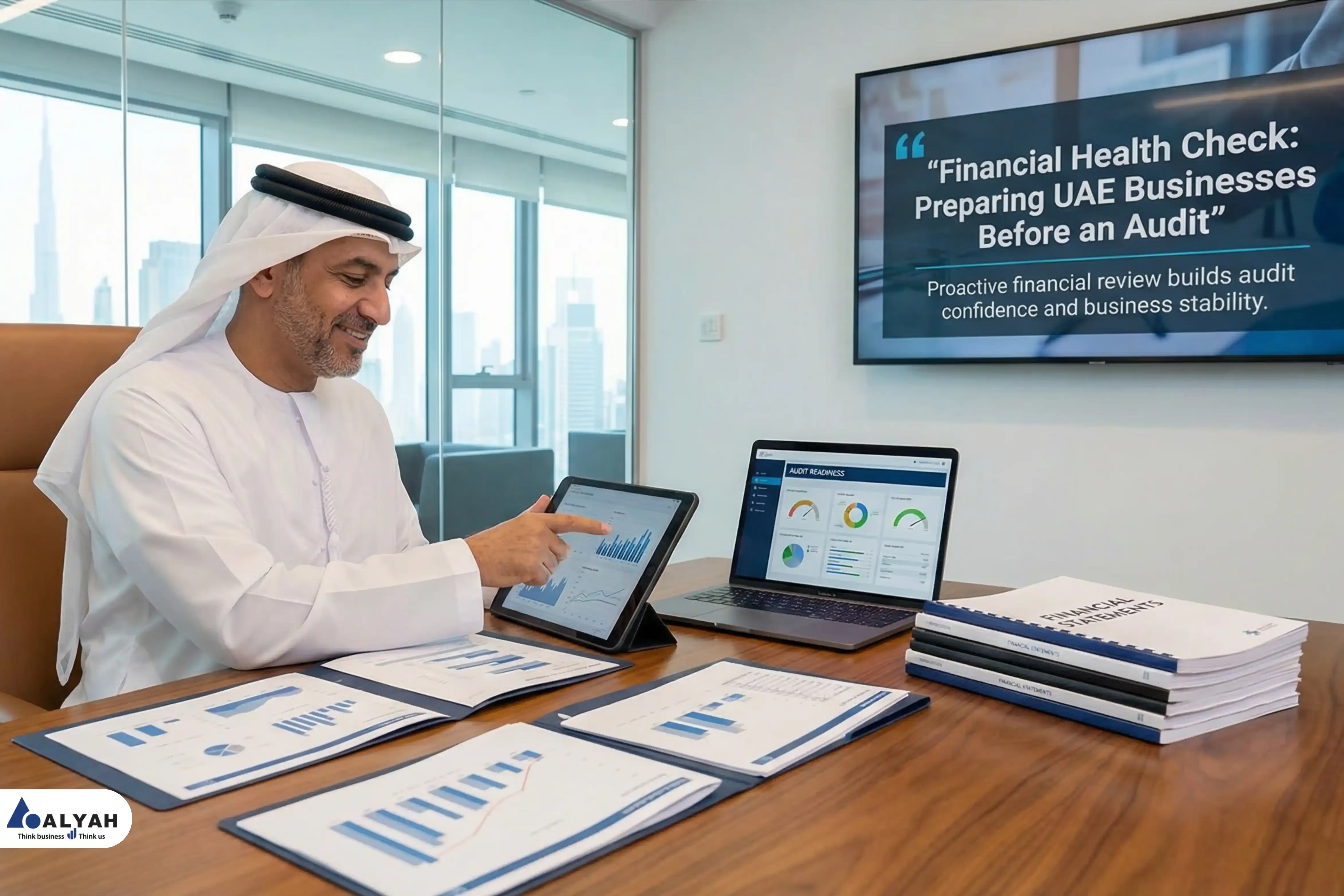
Many UAE business owners only examine their finances when something demands attention — a tax deadline, audit notice, or cash flow crunch. Outside of these moments, financial performance is often assumed to be “fine.”
But running a business without periodically reviewing its financial health is like driving without checking the dashboard. Problems rarely appear suddenly — they build quietly.
A financial health check is a structured review of how money moves through your business. It highlights strengths, exposes risks, and ensures your financial systems are working as intended — especially before an audit or regulatory review.

A financial health check is not an audit. It’s a proactive assessment that examines whether your business finances are organized, accurate, and sustainable.
Key areas typically reviewed include:
The goal is clarity — understanding whether your financial processes support growth or create hidden vulnerabilities.
Many companies assume that bookkeeping or annual reporting is enough. While those functions are essential, they don’t always reveal underlying issues.
Common reasons health checks are overlooked:
In reality, financial blind spots often emerge during audits, tax reviews, or expansion planning — when corrections are more stressful and costly.
Business owners don’t always notice financial strain until it affects operations. A health review becomes essential when you experience:
These signals indicate that financial systems may not be aligned with business activity.
Audits don’t just examine numbers — they assess consistency and documentation quality.
A financial health check helps ensure:
Businesses that perform regular reviews approach audits with confidence rather than urgency.

While audit readiness is important, the value of a financial health check extends into everyday decision-making.
Companies gain:
This clarity supports smarter investments, hiring decisions, and growth planning.
There is no one-size-fits-all schedule. Frequency depends on:
Many SMEs benefit from annual reviews, while expanding companies may require quarterly assessments. The goal is consistency — not crisis-driven reviews.
A structured financial health check typically includes:
Professional advisors provide an objective perspective — spotting inefficiencies internal teams may overlook. Firms such as Alyah Audit support UAE businesses by structuring these reviews to strengthen financial clarity and audit preparedness without disrupting operations.
Financial stress rarely comes from a single event — it builds from unnoticed gaps. A health check allows businesses to correct course before audits, regulatory deadlines, or expansion plans expose weaknesses.
Companies that adopt regular financial reviews operate with greater confidence. Decisions become informed rather than reactive, and compliance becomes routine instead of urgent.
For UAE businesses navigating growth and regulation, a financial health check is less about fixing problems — and more about ensuring your systems are strong enough to prevent them.
A financial health check is a structured review of a company’s cash flow, records, expenses, and compliance readiness to identify risks and improve financial stability.
No. A health check is proactive and diagnostic, focusing on identifying issues early, while an audit formally examines financial accuracy and compliance.
Regular reviews help businesses detect inefficiencies, stay audit-ready, improve cash flow visibility, and avoid compliance stress or unexpected financial issues.
Businesses should consider a review before audits, expansion plans, tax deadlines, or whenever financial reporting feels unclear or inconsistent.
Yes. Even small companies gain clarity, reduce financial risks, and improve decision-making by reviewing their financial systems periodically.



ALYAH
Unit Number: 2401
Preatoni Tower, Cluster L, JLT, Dubai

+971 42873327

sales@alyahaudit.ae
Click to open in Google Maps