Key Takeaways:Verifies a company’s financial, legal, tax, and operational records before deals or investments.
Ensures compliance with VAT, corporate tax, Emiratisation, and free zone regulations.
Covers finance, contracts, HR, IP, property, and commercial risks.
Produces a decision-ready audit report highlighting liabilities, red flags, and recommendations.
Helps buyers avoid risks, sellers maximise valuation, and investors make informed decisions.
What is a Due Diligence Audit?
A due diligence audit is a structured review process that verifies a company’s claims, uncovers liabilities, and assesses whether its financial and operational performance matches what’s presented. It is usually commissioned by buyers, investors, or lenders, but sellers may also conduct it in advance (vendor due diligence) to present a clean package to potential buyers.
In the UAE context, these audits are crucial because:
Many companies operate across free zones, DIFC/ADGM jurisdictions, or mainland licences, each with unique regulatory frameworks.
Compliance with VAT, corporate tax, and Emiratisation rules must be carefully verified.
Cultural and contractual practices in the region sometimes mean agreements aren’t fully documented — increasing the risk of undisclosed obligations.
Key Elements Covered in a Due Diligence Audit
A full due diligence audit involves several workstreams, tailored to the transaction. Some of the most common areas include:
Financial review — historical financials, earnings quality, working capital, debt and liabilities.
Legal review — ownership structure, contracts, shareholder agreements, pending litigations, regulatory licences.
Commercial review — market positioning, customer base, growth forecasts. This is often covered by commercial due diligence services.
Operational and IT review — supply chains, systems, cybersecurity, scalability.
Human resources review — employee contracts, end-of-service liabilities, Emiratisation obligations.
ESG and property review — environmental risks, land ownership, title deeds.
The Due Diligence Audit Checklist
A due diligence audit checklist ensures that no critical area of a company is overlooked during the review process. Below is a breakdown of the main categories, with a clear explanation of why each matters — particularly in the UAE/Dubai business environment.
1. Corporate Documents
Trade licences: In Dubai, businesses operate under trade licences issued by the Department of Economy and Tourism (DET) or free zone authorities (like DMCC, JAFZA, DIFC). Verifying these ensures the company is legally registered and authorised for its activities.
Incorporation papers: Memorandum and Articles of Association confirm the company’s formation, ownership structure, and shareholding. Any restrictions on share transfer or voting rights will affect a deal.
Shareholder registers: These reveal the true owners of the company. This is critical in the UAE, where foreign ownership rules and nominee arrangements may apply.
Why it matters: Without valid corporate documents, ownership transfer may be challenged, and regulatory authorities can penalise or revoke licences, making professional license amendments for local and free zone companies essential to ensure compliance and smooth ownership transitions.
2. Financial Records
Audited accounts (3–5 years): These show historical performance, profitability, and compliance with IFRS (required in the UAE). Buyers need to assess revenue sustainability and identify one-off adjustments.
Bank reconciliations: These confirm that cash balances reported match actual bank accounts — preventing manipulation or overstatement of liquidity.
Trial balances & ledgers: Provide detailed visibility into all accounts, transactions, and adjustments.
Why it matters: In Dubai’s high-growth sectors, reported earnings may sometimes be inflated. A proper review ensures the numbers align with reality and supports accurate valuation, which can be strengthened through professional financial statement preparation services.
3. Contracts
Leases: Real estate in Dubai is costly and strategic. Lease agreements need to be reviewed for transferability, renewal terms, and hidden liabilities, and engaging a professional RERA audit can help ensure compliance with local property regulations and uncover potential risks before a transaction.
Supplier agreements: Ensure key supply contracts are valid, competitive, and assignable to the buyer. Long-term commitments may affect future flexibility.
Customer contracts: Major clients often represent the bulk of revenue. Checking their contracts reveals dependence on key accounts and whether they can terminate upon change of ownership.
Partnership deals: Joint ventures, franchising, or distributor contracts may restrict future business opportunities.
Why it matters: Many UAE companies rely heavily on a few contracts — losing even one key client or supplier could dramatically impact valuation.
4. Compliance Documents
Tax filings: Since the introduction of corporate tax (2023) and VAT (2018) in the UAE, compliance is closely monitored. Reviewing filings prevents surprise liabilities.
VAT reports: Incorrect VAT handling can trigger significant penalties. This is particularly relevant for companies trading across free zones and mainland, making professional VAT consultancy and compliance essential to ensure accurate reporting and avoid fines.
Labour law compliance: Employee contracts must comply with the UAE Labour Law (Federal Decree-Law No. 33 of 2021). Non-compliance can result in fines and disputes.
Insurance policies: Adequate insurance (property, liability, medical) protects against operational risks.
Why it matters: The UAE has recently tightened tax enforcement. Buyers must ensure that a company isn’t carrying hidden regulatory risks.
5. Intellectual Property (IP)
Patents & trademarks: Many UAE businesses, especially in retail, tech, and F&B, rely heavily on brand recognition. Verifying IP ownership protects against infringement.
Copyrights & licences: Important for media, IT, and creative industries. Licensing agreements should allow transfer to new ownership.
Why it matters: Without secured IP, a company may not legally own its brand name, designs, or software — a major risk in competitive sectors like Dubai’s e-commerce and tech hubs.
6. Human Resources (HR) Information
Employee contracts: Must be compliant with UAE law, covering benefits, notice periods, and end-of-service gratuity.
Benefits & payroll: Accurate payroll records show compliance with WPS (Wage Protection System) and prevent disputes.
End-of-service liabilities: In the UAE, gratuity can add up significantly, especially in large or long-established companies.
Why it matters: Labour disputes are common in the region if contracts are not properly managed. Buyers need clarity on obligations to avoid sudden cost shocks.
7. Property & Environmental Documents
Title deeds: Proof of ownership of property in Dubai (issued by Dubai Land Department or free zone authority). Any mortgage or encumbrance must be disclosed.
Lease agreements: For rented premises, terms like renewal, escalation clauses, and early termination penalties must be checked, and conducting a DMCC approved audit can help ensure all lease obligations are compliant and risks are properly documented.
Environmental permits: Required for industrial and construction businesses. Issues such as waste management or contamination can lead to heavy penalties.
Why it matters: In real estate-driven markets like Dubai, property ownership and environmental compliance directly impact valuation and future usability. Using a structured checklist ensures that no major area is overlooked.
Why Due Diligence Matters in Dubai
Dubai is one of the most attractive hubs for investment in the Middle East. But the business landscape is complex — with over 40 free zones, a growing number of corporate tax obligations, and rapidly changing regulatory frameworks. Conducting a due diligence audit in Dubai ensures:
Buyers avoid overpaying for inflated earnings.
Investors discover regulatory red flags before closing.
Sellers can present transparent records to maximise valuation.
According to EY’s MENA Deal Report, the UAE continues to lead the region in deal activity, making due diligence an essential step for every major transaction.
What a Due Diligence Audit Report Includes
The final output is a structured audit report designed to support decision-making. A strong report will contain:
An executive summary with red-flag findings.
Key risks in financial, legal, tax, and commercial areas.
Quantified liabilities and potential adjustments to price.
Recommendations for warranties, indemnities, or post-deal integration.
Clear, decision-ready reporting allows boards, investors, and lenders to act with confidence.
Best Practices for UAE Companies
For buyers: customise the checklist to the UAE’s regulatory environment, especially VAT, corporate tax, and Emiratisation requirements, and ensure all documents are verified through professional document legalization & attestation services.
For sellers: prepare documents in advance; consider vendor due diligence to speed negotiations.
For investors: rely on local experts familiar with Dubai’s free zone and federal frameworks.
Final Thoughts
A due diligence audit is not just a compliance exercise — it’s a risk management tool that directly impacts valuation, negotiation, and long-term success. For companies and investors in the UAE, especially in Dubai’s dynamic market, thorough due diligence ensures transparency, protects capital, and builds trust between parties.
Alyah Audit offers tailored commercial due diligence services and multi-disciplinary audit support in Dubai and across the UAE. If you’re planning a deal, investment, or partnership, our team can provide the insight you need through a detailed due diligence audit report.
FAQs
1. What is due diligence audit?
A due diligence audit is a structured investigation of a company’s financial, legal, tax, and operational records before an investment, merger, or acquisition. It helps verify claims made by the seller, uncover risks, and provide insights for valuation and deal structuring.
2. What are the three types of due diligence?
The three most common types are financial due diligence (analysing accounts, cash flow, liabilities), legal due diligence (checking contracts, ownership, compliance), and commercial due diligence (assessing market position, competition, and growth prospects). In larger deals, tax and operational reviews may also be included.
3. What's a due diligence checklist?
A due diligence checklist is a structured list of documents and areas to review during the audit. It typically covers corporate records, contracts, financial statements, tax filings, HR data, intellectual property, and compliance documents to ensure no critical risk is overlooked.
4. What is due diligence in AML?
In Anti-Money Laundering (AML), due diligence refers to the process of verifying customer identities, understanding the nature of their business, and monitoring transactions to prevent money laundering or terrorist financing. It includes Know Your Customer (KYC) checks and ongoing risk-based monitoring.
5. What is another word for due diligence?
Another term often used is “background investigation” or “compliance review.” In the business world, it can also be called a “business review,” “audit review,” or “risk assessment” depending on the scope and purpose.
6. Who prepares a due diligence report?
A due diligence report is usually prepared by professional auditors, accountants, or legal and financial advisors engaged by the buyer or investor. In the UAE, firms like Alyah Audit provide tailored due diligence audit reports that consolidate findings into decision-ready insights.
7. What is the difference between due diligence and statutory audit?
A statutory audit is a legal requirement that examines whether financial statements comply with regulations. A due diligence audit, however, is optional and transaction-specific, focusing on uncovering risks, validating information, and supporting business decisions like acquisitions or partnerships.
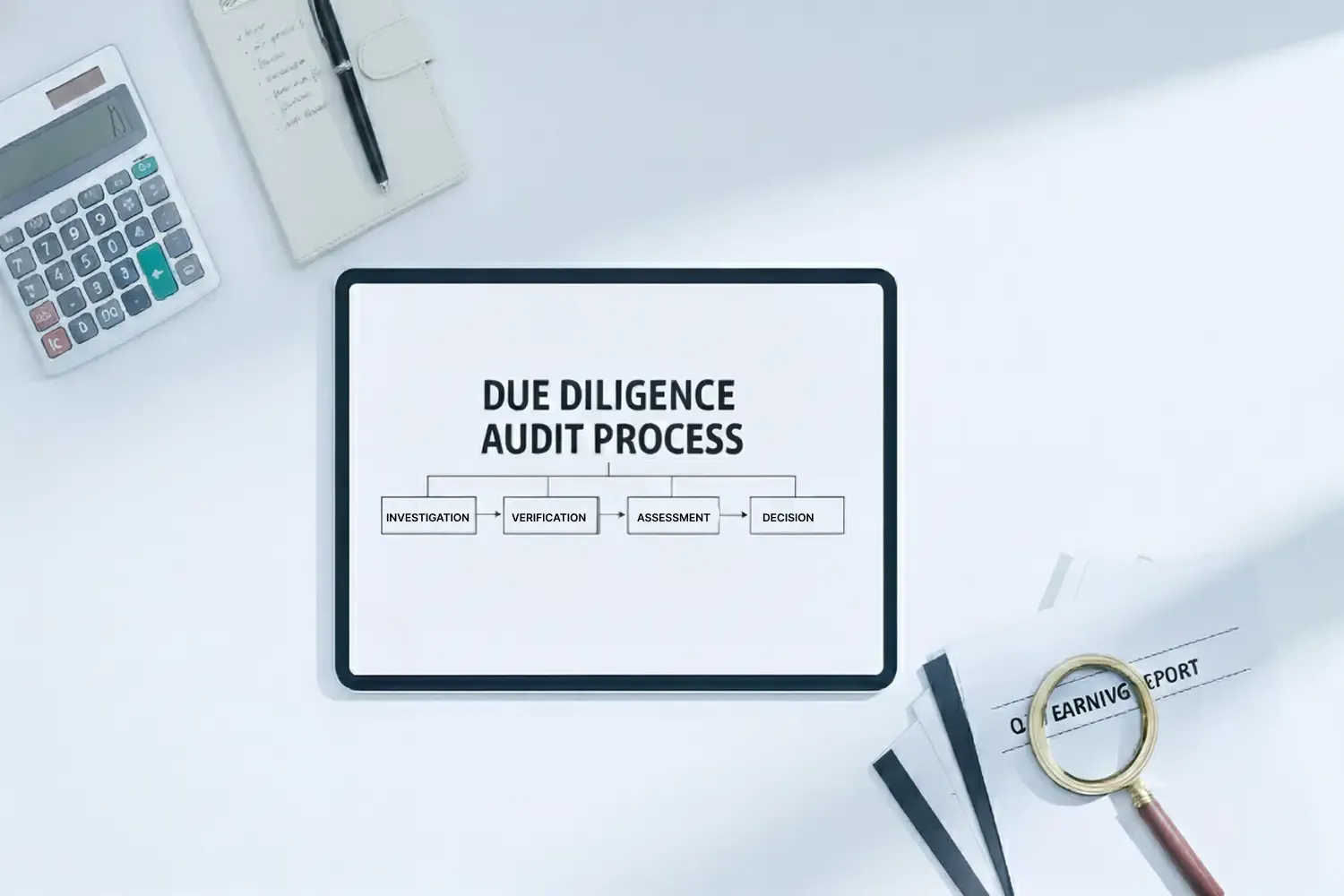
8. What are the three elements of due diligence?
The three core elements are:
1. Investigation — collecting and reviewing relevant documents.
2. Verification — confirming accuracy of financial, legal, and operational claims.
3. Assessment — analysing risks and opportunities to inform negotiations and strategy.
9. What is the difference between KYC and due diligence?
KYC (Know Your Customer) is part of the due diligence process, focused on verifying a client’s identity and business background. Due diligence is broader — it includes financial, legal, commercial, and operational checks beyond identity, covering the entire organisation or transaction.
10. What are the 4 pillars of customer due diligence?
The four pillars are:
1. Customer identification and verification (via reliable documents).
2. Beneficial ownership identification (who ultimately controls the entity).
3. Understanding the business relationship (purpose and nature of activity).
4. Ongoing monitoring of customer transactions for unusual patterns.