
FROM OUR BLOG
February 18, 2026
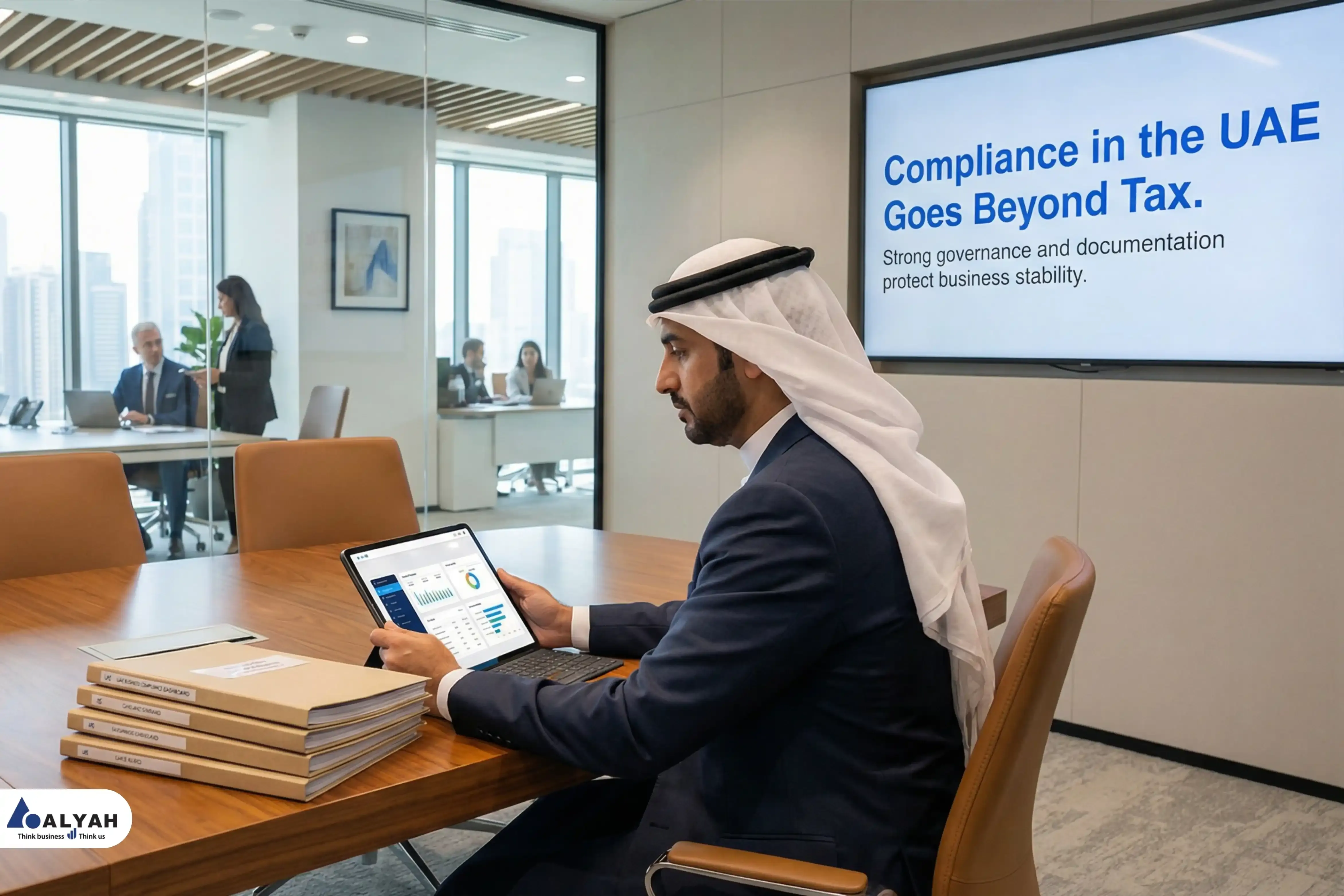
When UAE business owners hear the word compliance, most immediately think of VAT filings or corporate tax deadlines. While tax obligations are important, compliance in the UAE extends far beyond financial reporting.
Modern businesses operate within a structured regulatory framework that includes ownership transparency, recordkeeping expectations, and governance standards. Ignoring these areas doesn’t always cause immediate disruption — but over time, gaps can trigger penalties, audits, or operational setbacks.
Understanding broader compliance requirements isn’t about fear — it’s about building a business that runs smoothly under scrutiny.
The UAE has steadily strengthened corporate governance standards to support transparency, investor confidence, and fair market practices. These regulations are not limited to financial reporting.
Compliance today includes:
Many companies remain compliant with tax filings yet unknowingly fall short in other areas — often because they don’t realize additional obligations exist.

One commonly overlooked requirement involves identifying and maintaining records of Ultimate Beneficial Owners (UBO). This ensures authorities can clearly understand who ultimately controls a company.
Businesses are expected to:
Failure to keep accurate ownership information can create complications during regulatory reviews or banking interactions.
For business owners, this isn’t just paperwork — it demonstrates operational transparency.
Financial bookkeeping is only part of compliance documentation. UAE businesses are also expected to maintain structured operational records.
These may include:
Disorganized records increase stress during inspections or audits. Good documentation practices reduce uncertainty and speed up regulatory interactions.
Even small and mid-sized companies benefit from basic governance structures. Governance isn’t only for large corporations — it establishes accountability and clarity.
Effective internal controls help businesses:
When controls are informal or unclear, mistakes and misunderstandings become more likely.
Many businesses believe that if taxes are filed correctly, compliance is complete. In reality, regulatory expectations function as an ecosystem — each area supports the other.
Partial compliance can lead to:
Addressing compliance holistically prevents these avoidable disruptions.
Waiting until an inspection or renewal deadline exposes gaps under pressure. Proactive compliance management allows businesses to correct issues early.
This approach includes:
Companies that treat compliance as an ongoing discipline — rather than a reactive task — experience smoother regulatory interactions.
Business owners should reassess compliance if they notice:
These signals suggest that compliance processes may need strengthening.
Professional advisory support can help structure documentation and governance practices. Firms like Alyah Audit assist businesses in aligning operational records and compliance frameworks so regulatory expectations are met without last-minute stress.
Strong compliance isn’t about bureaucracy — it’s about resilience.
A well-documented, transparent business:
✔ Responds confidently to audits
✔ Builds credibility with regulators and partners
✔ Reduces operational disruptions
✔ Supports long-term growth
When compliance is embedded into daily operations rather than treated as an afterthought, businesses gain control instead of reacting under pressure.
For UAE companies, understanding compliance beyond tax is a strategic advantage — one that protects operations and reinforces professional credibility.
Compliance includes ownership transparency, proper documentation, governance practices, and regulatory recordkeeping — not just VAT or corporate tax filings.
Yes. Businesses must keep updated Ultimate Beneficial Owner (UBO) information to meet transparency requirements and avoid regulatory issues.
Companies should maintain contracts, ownership records, licensing papers, financial documents, and regulatory filings to ensure readiness during inspections or audits.
Yes. Disorganized or incomplete records can delay renewals, audits, or regulatory reviews and may increase scrutiny from authorities.
Periodic reviews — at least annually — help ensure records, ownership details, and governance practices remain accurate and aligned with regulations.


ALYAH
Unit Number: 2401
Preatoni Tower, Cluster L, JLT, Dubai

+971 42873327

sales@alyahaudit.ae
Click to open in Google Maps