
Informational
May 12, 2026

You have found a business in the UAE you want to buy. The seller has given you financial statements showing strong revenue and healthy margins. Before you sign anything, one process stands between you and a costly mistake: financial due diligence.
In the UAE in 2026, this matters more than ever. Corporate tax is now active. VAT has been running since 2018. FTA enforcement is intensifying. A business that looks clean on the surface can be carrying hidden VAT liabilities, unfiled corporate tax returns or unrecorded employee gratuity obligations worth hundreds of thousands of dirhams — all of which become your problem the moment ownership transfers.
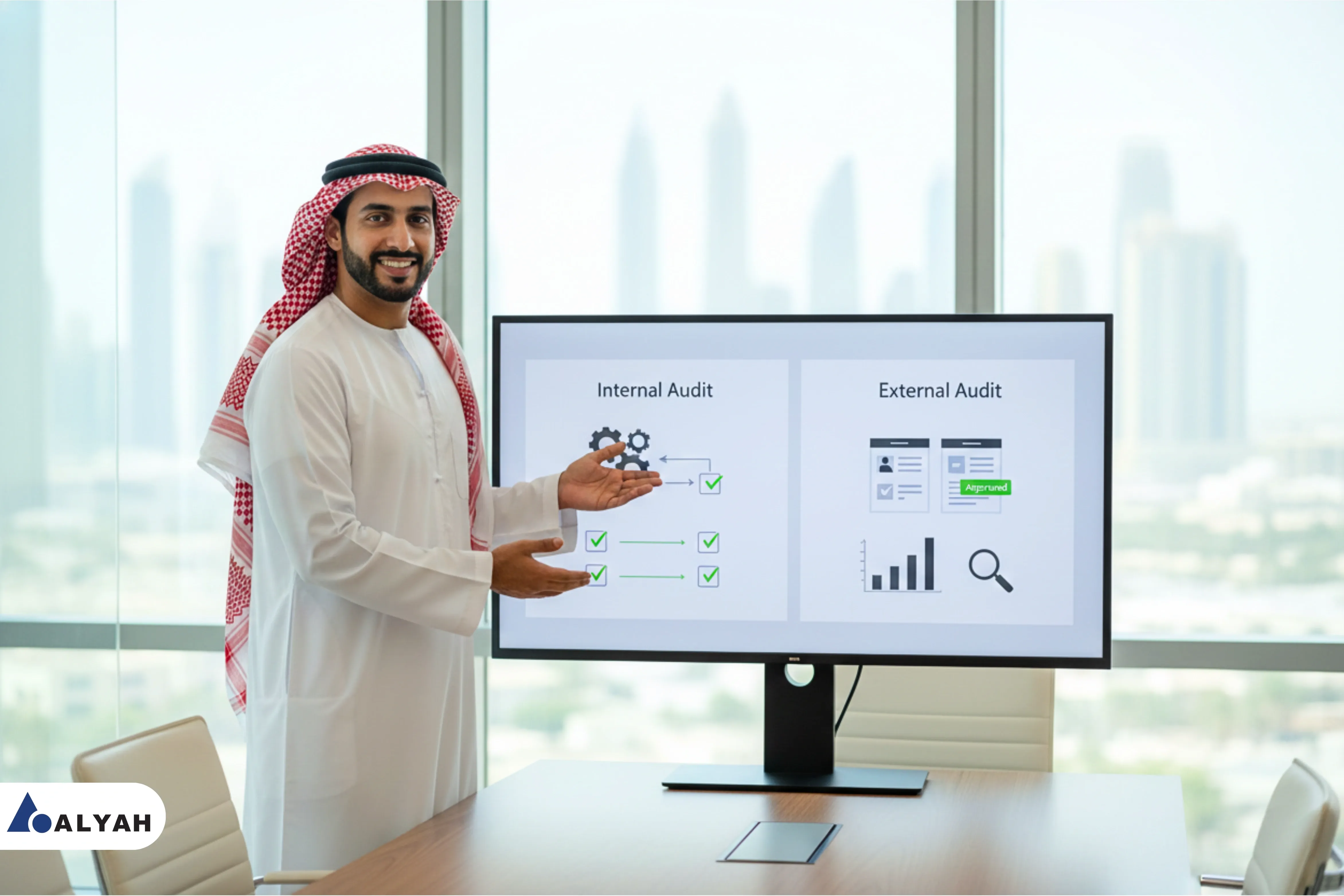
Financial due diligence is a structured, independent investigation of a target company's financial records conducted by a qualified professional before a business acquisition. It is different from a standard audit — an audit confirms whether historical financial statements are accurate. Financial due diligence goes further, assessing whether those numbers are sustainable, whether hidden liabilities exist, and whether the business is worth what the seller is asking.
The goal is not just to verify figures — it is to put a number on the risk. A hidden VAT liability of AED 400,000 is a direct negotiation tool. It reduces the purchase price, triggers escrow arrangements or goes into the sale and purchase agreement as a specific indemnity.
No. An audit is an independent opinion on whether a company's financial statements are accurate and comply with IFRS. Financial due diligence goes deeper — it investigates whether the earnings are sustainable, tests for hidden liabilities, reviews tax compliance history and assesses the quality of the assets being acquired. Every serious business acquisition in the UAE should have both: a review of historical audited accounts and a dedicated due diligence investigation.

The UAE's regulatory environment has changed dramatically since 2018. Every business acquired today carries tax history from the VAT era and potentially from the first corporate tax period. Buyers who do not investigate this history inherit it.
VAT has been in force since January 2018. Eight years of filings means eight years of potential errors — incorrect classifications, missed reverse-charge obligations, overstated input tax credits or incomplete filing periods. The FTA can review VAT records going back five years. Under the 2026 amendments to the Tax Procedures Law, refund claims can extend this window further. A business with historical VAT errors does not disclose them in a sale — a financial due diligence investigation uncovers them.
UAE corporate tax is now active for financial years starting from June 2023. Many businesses filing their first corporate tax returns in 2026 have made errors — incorrect QFZP claims, unregistered tax periods, or related party transactions not documented at arm's length. As a buyer, you must confirm corporate tax registration, filing history and compliance status before closing any deal.
UAE Labour Law requires companies to maintain end-of-service gratuity provisions for every employee. Many UAE SMEs do not correctly accrue these obligations in their accounts. On a company with 20 employees averaging five years of service, the unrecorded liability can easily exceed AED 500,000 — none of which appears on the balance sheet you were shown.
Sellers may inflate revenue in the period leading up to a sale through early recognition of revenue, intercompany sales that net to zero, or one-off transactions that will not recur. A financial due diligence review identifies these patterns and adjusts reported earnings to reflect sustainable performance.
Yes. When you acquire a company through a share purchase — buying the shares rather than just the assets — you acquire the entity itself, including all historical liabilities. FTA penalties, unpaid VAT, corporate tax obligations and even AML compliance failures follow the company, not the former shareholders. Asset purchases reduce but do not eliminate this risk. Financial due diligence and specific tax indemnities in the sale and purchase agreement are the only real protections.

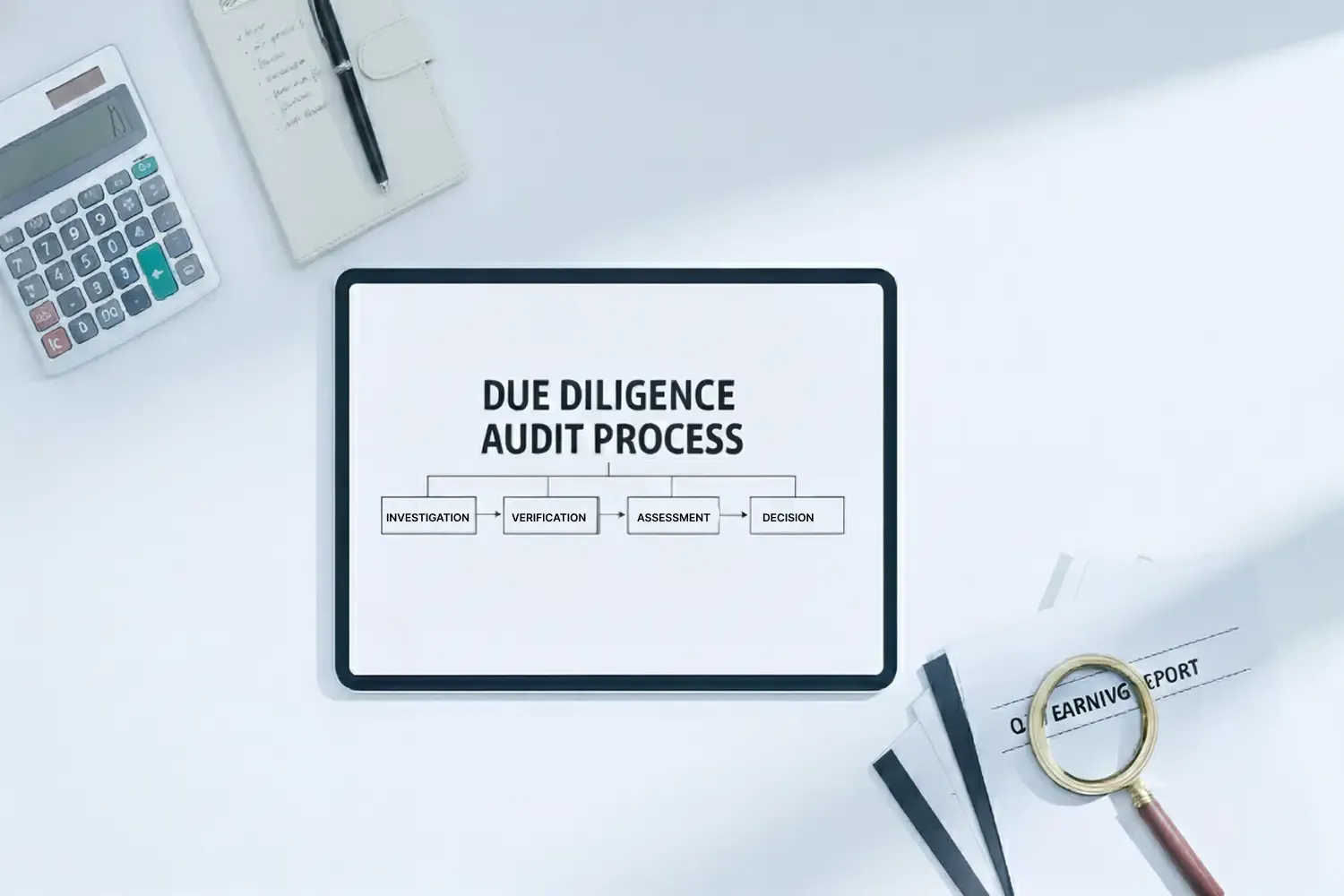
A proper financial due diligence engagement for a UAE business acquisition covers:
The auditor adjusts reported EBITDA to remove one-off items, non-recurring income and any revenue that will not continue post-acquisition. This gives you the real sustainable earning power of the business — which is what you are actually buying.
Assesses whether the business has sufficient working capital to operate normally after the deal closes. Sellers sometimes run down receivables or delay payables in the months before a sale to inflate the closing cash balance — a working capital review identifies this.
The due diligence team reviews all VAT returns filed since 2018, reconciles them against sales and purchase records, and identifies any discrepancies. For businesses with significant input VAT credits, the 2026 VAT amendments create an additional urgency — unclaimed credits from 2021 expire permanently at 31 December 2026. If the target company has unrecovered VAT you can claim, this is a value opportunity. If it has incorrect claims, this is a liability.
Confirms that the company is registered for corporate tax, that all required filings have been submitted, and that the tax position is defensible. For free zone companies claiming QFZP status for the 0% rate, the due diligence must verify that qualifying income is properly structured and documented — the FTA will not accept retroactive corrections after ownership changes.
Reviews all formal and informal borrowing — bank loans, shareholder loans, supplier credit lines and any contingent liabilities such as pending litigation, guaranteed obligations or disputed contracts that could crystallise into a debt after acquisition.
In UAE businesses, transactions between the company and its shareholders, family members or associated entities are common. Financial due diligence identifies these transactions, assesses whether they were at arm's length, and determines whether they create ongoing obligations for the buyer.
For SMEs with one to three years of audited accounts and organised records, a financial due diligence engagement typically takes 2 to 4 weeks from data room access to final report. For larger or more complex businesses, 4 to 8 weeks is standard. The timeline depends heavily on the quality and completeness of records provided by the seller. Sellers who are serious about the deal provide full data room access promptly.

This is one of the most important decisions in any UAE acquisition and directly affects the due diligence scope:
• Share sale — you buy the entire company including all historical liabilities. The due diligence must be comprehensive and cover all historical periods.
• Asset sale — you buy only specific assets and contracts, leaving the liabilities with the seller entity. Due diligence is narrower but must still verify that the assets being purchased are free from encumbrances.
Most UAE business acquisitions are structured as share sales because UAE trade licences and free zone registrations cannot simply be transferred to a new owner — the company entity itself must continue. This means the historical tax and compliance risk transfers with it.
A Tax Clearance Certificate from the FTA confirms that a business has no outstanding tax liabilities at the date of issue. Requesting one before closing provides some protection, but it is not a substitute for financial due diligence. The FTA certificate covers declared positions — it does not cover errors or omissions in past filings that the FTA has not yet discovered. Full due diligence is always required.
Alyah Audit is a Ministry of Economy approved audit firm based in JLT Dubai, providing financial due diligence services for UAE business acquisitions. Led by Dr. Ali Mohammed Rashid AlShehhi — a licensed auditor and UAE court expert with 30 years of UAE experience, approved across 18 free zones and all mainland authorities.
Our due diligence process covers quality of earnings, VAT and corporate tax compliance history, working capital, debt and off-balance sheet obligations, and related party transactions. We issue a structured due diligence report with findings, quantified risks and recommendations — giving you a clear picture of what you are buying before you commit.
We also provide business and equity valuation services where an independent valuation is needed alongside the due diligence, and transfer pricing documentation for acquisitions where related party transactions require arm's length structuring. Book a free consultation at alyahaudit.ae/contact.
Buying a business in the UAE? Get financial due diligence from a Ministry-approved audit firm. Alyah Audit — JLT Dubai, 30 years UAE experience. Free consultation at alyahaudit.ae/contact
Yes. Audited accounts confirm that the financial statements are accurate — they do not assess whether the earnings are sustainable, whether hidden liabilities exist or whether the tax position is defensible. A financial due diligence investigation examines the business as a going concern from a buyer's perspective, which is an entirely different exercise from an audit.
Walk away or significantly reduce your offer until they comply. A seller who withholds financial records in a due diligence process is almost always concealing something that would affect the price or your decision to proceed. No responsible advisor will recommend completing an acquisition without full data room access. Full transparency is a non-negotiable condition of any serious transaction.
Yes. The FTA audits the legal entity, not its ownership. If you acquire the company through a share purchase, the FTA can review any period within the applicable statute of limitations regardless of when you became the owner. This is why specific tax indemnities and representations and warranties covering pre-acquisition periods are essential in the sale and purchase agreement.
A data room is a secure online repository where the seller provides all financial, legal and operational documents for the buyer's review. It should include audited accounts for the past three to five years, VAT returns, corporate tax filings, bank statements, contracts, employee records and any correspondence with the FTA or licensing authorities. The quality and completeness of the data room directly determines how efficient and reliable the due diligence process is.
The primary protections are representations and warranties in the sale and purchase agreement — the seller formally states that no material liabilities exist beyond what is disclosed. Breach of these warranties gives you a legal claim against the seller. For higher-risk areas such as tax, an escrow arrangement — where a portion of the purchase price is held for 12 to 24 months pending any FTA claims — provides additional financial protection. Your due diligence team and legal advisors should work together to structure these protections correctly.


ALYAH
Unit Number: 2401
Preatoni Tower, Cluster L, JLT, Dubai

+971 42873327

sales@alyahaudit.ae
Click to open in Google Maps