
Informational
May 15, 2026

Thousands of UAE business owners make the same costly mistake every year: they stop trading and assume the company no longer exists. It does. Your trade licence keeps renewing. Your VAT return obligations keep accumulating. MOHRE fines for unresolved employee visas compound in the background — all against a business generating zero revenue.
In the UAE, a company does not cease to exist because it stops operating. It ceases to exist only when formally deregistered through the legally required liquidation process — and that process now includes more steps than ever, because UAE corporate tax and FTA clearance have become mandatory gating steps that must be completed before any authority will issue a deregistration certificate.
This guide walks through every step, including the liquidation audit, what it must cover, and why it is not optional.
Company liquidation is the formal legal process of terminating a business's trade licence and removing it from the official register. It is governed by Federal Decree-Law No. 32 of 2021 on Commercial Companies for mainland companies and by the relevant free zone implementing regulations for free zone entities.
It involves four parallel tracks that must all be completed before the authority issues a final deregistration or dissolution certificate:
• Regulatory clearances — from MOHRE, immigration, utility providers and any sector-specific authority
• Tax clearance — from the FTA for both VAT and corporate tax deregistration
• Creditor settlement — paying all outstanding debts after a mandatory public notice period
• Liquidation audit — a signed report from a UAE-licensed auditor confirming all assets are distributed and all liabilities settled
Your trade licence continues to renew automatically, accumulating renewal fees. The FTA continues to expect quarterly VAT returns and will impose late filing penalties for each missed period. MOHRE fines apply for each employee visa not formally cancelled. Directors and shareholders of mainland LLCs can face personal travel bans for unresolved liquidation liabilities — even after leaving the UAE.

Shareholders must formally pass a resolution to dissolve the company and appoint a licensed liquidator. For mainland LLCs, this resolution must be notarised. For free zone companies, the resolution must be in the format required by the specific free zone authority — which varies. The resolution triggers the formal liquidation case.
A liquidator must be a qualified professional licensed by the UAE Ministry of Economy. For free zone companies, the liquidator must also appear on the free zone's approved liquidator list — the same approved-list requirement that applies to auditors. Using a liquidator not on the approved list will result in your submission being rejected.
For mainland companies, the liquidation notice must be published in two UAE newspapers — one in Arabic, one in English — and a 45-day waiting period must pass to allow creditors to file claims. Free zone companies typically follow a similar publication requirement through the free zone's official channels. No assets can be distributed to shareholders until all verified creditor claims are settled in full.
All employee work permits must be cancelled through MOHRE and all residence visas cancelled through immigration. End-of-service gratuity must be calculated and paid in full for every employee before MOHRE will issue clearance. A single unresolved MOHRE complaint — even a minor one — will block the entire process until resolved.
This is the most common cause of delays in 2026. Both VAT deregistration and corporate tax deregistration must be completed with the FTA before any licensing authority will issue a deregistration certificate.
For VAT deregistration, apply through the FTA EmaraTax portal. All outstanding VAT returns must be filed and all VAT due paid before the FTA will process the application. The FTA then issues a final return period which must be filed within 28 days of its close. Only after the final return is accepted will the FTA issue the clearance letter.
For corporate tax, deregistration must be applied within three months of the date of cessation or liquidation. Under FTA Decision No. 6 of 2023, this is a fixed deadline — missing it attracts penalties. Run VAT and corporate tax deregistration in parallel, not sequentially, to save weeks.
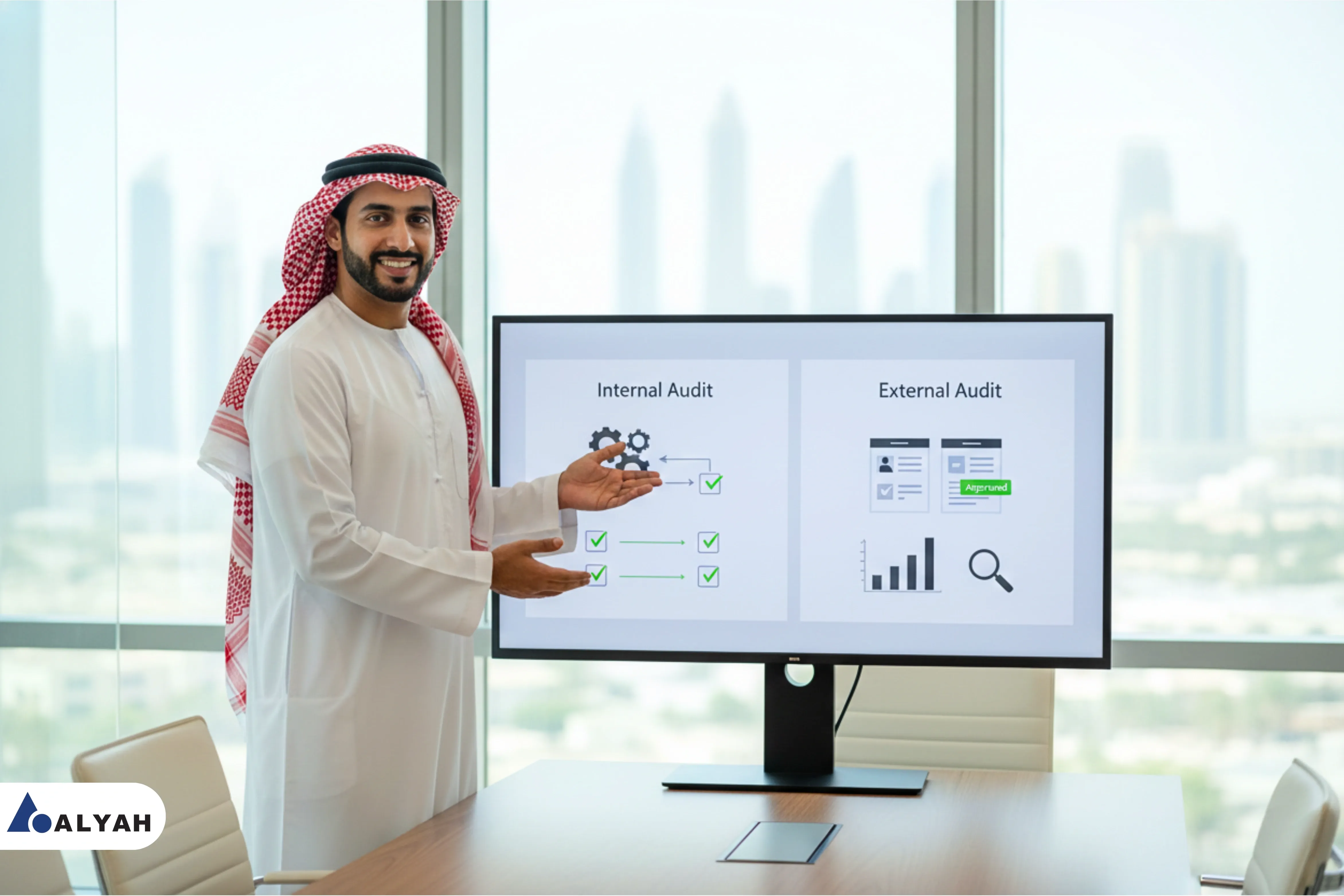
The licensing authority — whether DED, a free zone, or DIFC — requires a liquidation audit report prepared and signed by a UAE-licensed auditor as part of the deregistration dossier. This is a legal requirement, not optional. For most free zones, the auditor must also appear on the zone's approved auditor list.
The liquidation audit covers the period from the last annual audit date through to the exact liquidation date. It confirms:
• All assets have been identified, valued and distributed correctly
• All liabilities have been settled — creditors, employees, tax authorities
• The final liquidation balance sheet is accurate and IFRS-compliant
• No undisclosed obligations remain outstanding
For free zone liquidations, many authorities also require a notarised signature specimen from the auditor — confirming the signature on the audit report is genuine. If your auditor cannot provide this, they may not be properly set up for liquidation work.
Yes for mainland LLCs and most major free zone companies including DMCC, JAFZA, IFZA, RAKEZ and DSO. Some smaller or dormant free zone companies may qualify for a simplified strike-off process that does not require a full audit — but the free zone authority must confirm this in writing before you proceed. Never assume an exemption applies without written confirmation.
Once all clearances are obtained — MOHRE, immigration, FTA, utility providers, and the liquidation audit — submit the full package to the relevant authority. For mainland companies this goes to the DED. For free zone companies, to the free zone authority through their portal. The authority reviews the package and issues the final cancellation certificate or certificate of dissolution, which is the official end of the company's legal existence.
Bank accounts must be closed last — after all obligations are settled and the deregistration certificate is received. Some banks require an in-person visit by the authorised signatory for final account closure.

• Simple free zone company with no employees, no FTA filings outstanding, no creditors: 4 to 8 weeks
• Mainland LLC with employees, VAT registration and standard creditors: 3 to 6 months
• Complex cases with court disputes, multiple creditor claims or extensive FTA back-filings: 6 to 12 months or longer
The single biggest cause of delay in 2026 is incomplete FTA tax filings. Businesses that have not filed VAT returns for multiple periods must back-file every outstanding period before the FTA will process deregistration. Starting this process immediately — in parallel with the shareholder resolution — saves the most time.
Yes, but the accumulated obligations may be significant. Every period your company was registered and VAT-registered generates a filing obligation — even if there were no transactions. You will need to back-file all missing returns before the FTA will process deregistration. For companies that have been dormant for several years, this can mean filing 20 or more nil VAT returns plus corporate tax returns before clearance is possible. Act immediately — the longer you wait, the more penalties accumulate.

One fact most business owners do not know: the FTA can conduct a post-deregistration audit for up to five years from the date of deregistration. If past VAT returns were incorrect or incomplete, the FTA can still raise assessments against the former shareholders. This is why the liquidation audit and proper documentation of all FTA submissions during the closure process is essential — not just for completing the deregistration, but for protecting yourself from post-closure liability.
Alyah Audit is a Ministry of Economy approved audit firm based in JLT Dubai, approved across 18 UAE free zones and all mainland authorities. We are led by Dr. Ali Mohammed Rashid AlShehhi — a licensed auditor and UAE court expert with 30 years of UAE experience.
Our liquidation auditing services cover the complete liquidation audit requirement — the signed audit report, notarised signature specimen where required, the final liquidation balance sheet, and all free zone submission formats. We work alongside the liquidation process from day one rather than being called in at the last minute, which eliminates the delays that come from auditor preparation gaps.
We also provide company liquidation advisory, VAT consultancy and compliance and backlog accounting for companies with outstanding filing backlogs that must be cleared before the FTA will process deregistration. Book a free consultation at alyahaudit.ae/contact.
Closing a UAE company? Alyah Audit provides liquidation audits for mainland and free zone companies — approved across 18 free zones. Free consultation at alyahaudit.ae/contact
For most company types — mainland LLCs and major free zone entities — no. A licensed liquidator must be formally appointed and must appear on the relevant approved list. The only exception is very simple sole establishments or certain freelance licences where a simplified cancellation process applies. Check with your specific authority before assuming a simplified route is available.
You must file all required corporate tax returns up to the date of cessation and then apply for corporate tax deregistration with the FTA within three months of the cessation date. The FTA will not issue a Tax Clearance Certificate — which is needed for deregistration — until all corporate tax obligations are met. If you have not yet registered for corporate tax, you must register and then immediately apply to deregister as part of the liquidation process.
Yes. The FTA can audit deregistered companies for up to five years from the date of deregistration. If historical VAT returns were incorrect or incomplete, the FTA can raise assessments against former shareholders during this window. This is why thorough documentation of all FTA filings during the liquidation process is essential — not just for completing the closure, but for protecting yourself from post-closure liability.
EOSB — end-of-service benefits — must be calculated and paid to every employee before MOHRE will issue clearance, and before any assets can be distributed to shareholders. EOSB is treated as a senior creditor obligation in the UAE liquidation priority order. Underpaying or underestimating gratuity is one of the most common causes of unexpected costs in liquidation — companies often fail to correctly accrue these liabilities over time.
For a simple free zone company with no outstanding FTA filings, one employee with settled gratuity, and a clean relationship with the free zone authority, closure can sometimes be completed in 4 to 8 weeks from the date of the shareholder resolution. The main variable is FTA processing speed. Engaging your liquidator and auditor immediately after the shareholder resolution, and running FTA deregistration in parallel with the free zone process, gives you the best chance of the shortest timeline.


ALYAH
Unit Number: 2401
Preatoni Tower, Cluster L, JLT, Dubai

+971 42873327

sales@alyahaudit.ae
Click to open in Google Maps