
Informational
February 12, 2026
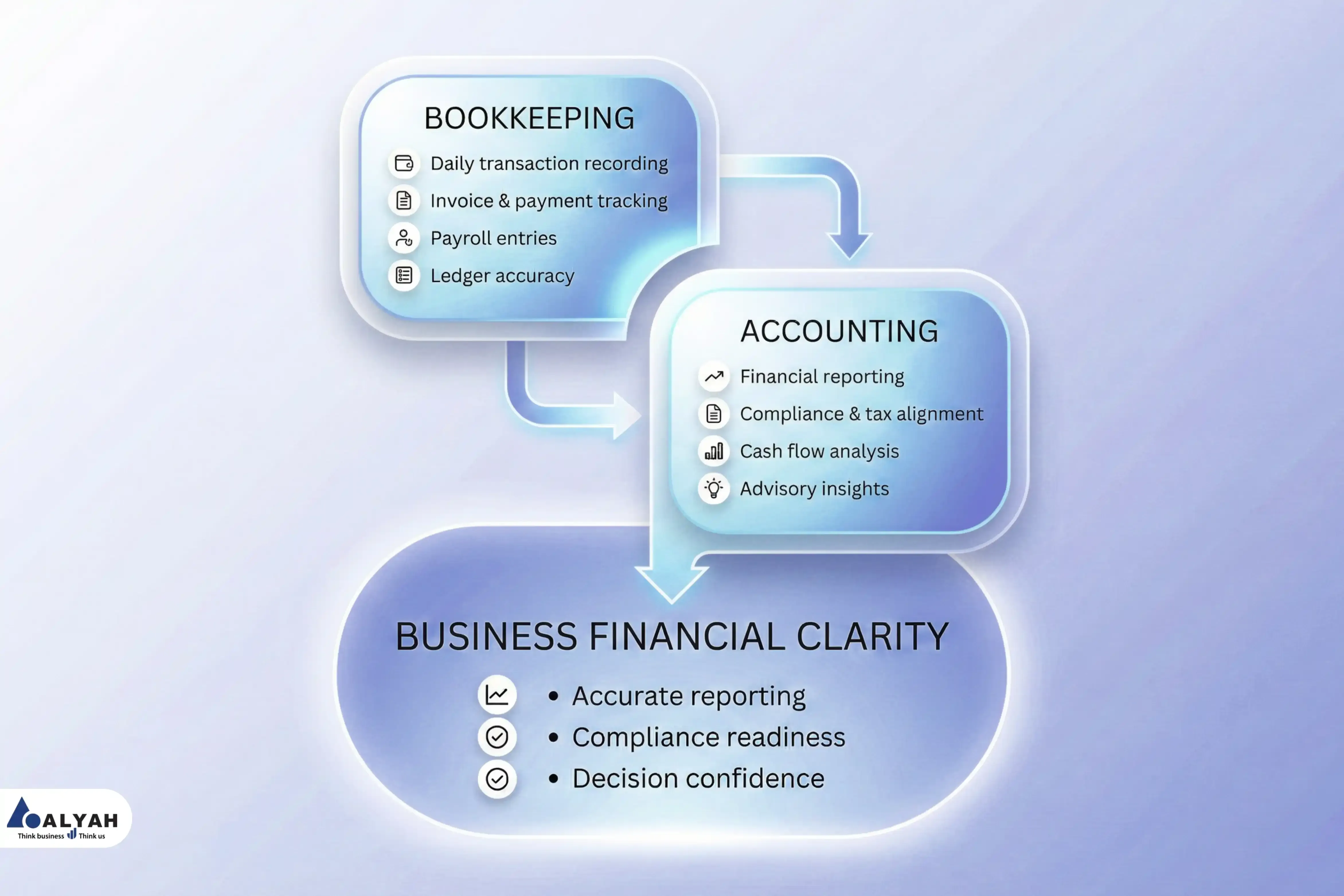
Many UAE business owners use the terms bookkeeping and accounting interchangeably. At first glance, they seem like the same function — tracking numbers and preparing reports. But in practice, they serve very different roles.
Understanding the distinction isn’t just about terminology. It affects how accurately your finances are managed, how prepared you are for compliance, and how confidently you can make business decisions.
Whether you run a startup, SME, or growing enterprise in the UAE, knowing how bookkeeping and accounting work together can prevent costly confusion later.

The UAE regulatory landscape requires businesses to maintain organized financial records. VAT compliance, corporate tax reporting, and audit readiness depend heavily on financial accuracy.
When bookkeeping and accounting roles are misunderstood or mixed without structure, businesses often experience:
Recognizing where bookkeeping ends and accounting begins allows companies to build a stronger financial foundation.
Bookkeeping focuses on daily financial recording. Think of it as the operational layer of financial management.
Typical bookkeeping tasks include:
Without consistent bookkeeping:
Bookkeeping ensures that every financial activity is documented — creating a reliable base for analysis and compliance.
Accounting builds on bookkeeping data to deliver interpretation and financial insight.
An accountant typically handles:
Accounting transforms raw numbers into decision-making tools. It helps business owners understand:
Without accounting oversight, businesses may have records — but lack clarity.
While bookkeeping ensures data accuracy, it doesn’t analyze financial performance or compliance exposure.
Accounting depends on clean bookkeeping data. Poor records lead to flawed analysis.
Even small UAE companies must maintain structured records and compliance readiness. Growth amplifies financial complexity quickly.

If any of these feel familiar, bookkeeping and accounting roles may need reinforcement:
These indicators suggest the financial system lacks coordination.
Some businesses maintain internal bookkeeping while outsourcing accounting. Others prefer integrated solutions.
The right approach depends on:
Many UAE firms benefit from structured external support that combines bookkeeping discipline with accounting oversight. Providers like Alyah Audit often integrate both functions to ensure financial accuracy and compliance readiness without overburdening internal teams.
Strong businesses don’t rely on guesswork — they rely on structured financial systems.
Bookkeeping keeps records accurate. Accounting turns those records into actionable insight. Together, they provide clarity, compliance confidence, and operational control.
When UAE business owners understand and respect both roles, financial management becomes less reactive and more strategic — reducing stress and improving decision-making.
Clear financial structure isn’t just administrative — it’s a competitive advantage.
Yes. UAE businesses are expected to maintain accurate financial records for tax compliance, audits, and regulatory reporting. Proper bookkeeping ensures transactions are documented and accessible when required.
Bookkeeping focuses on recording daily financial transactions, while accounting analyzes that data to prepare reports, ensure compliance, and guide business decisions.
Small businesses can handle basic bookkeeping, but accounting oversight is important for compliance, financial planning, and audit readiness as the business grows.
Ideally, bookkeeping should be updated regularly — weekly or monthly — to maintain accurate financial tracking and avoid compliance stress during tax or audit periods.
Yes. Inaccurate records can lead to reporting issues, penalties, or complications during audits. Clean bookkeeping supports smoother compliance and financial transparency.


ALYAH
Unit Number: 2401
Preatoni Tower, Cluster L, JLT, Dubai

+971 42873327

sales@alyahaudit.ae
Click to open in Google Maps